

 See My Latest Article on HelloNation
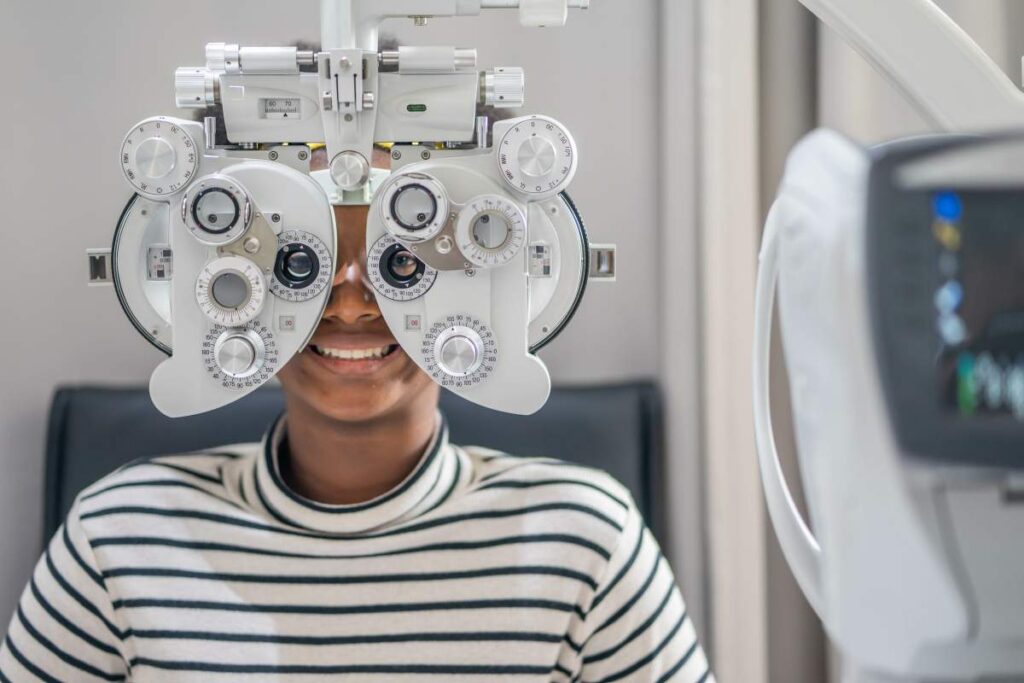
Many people in Tullahoma, TN wonder whether practicing eye exercises can reduce dependence on glasses, sharpen blurry vision, or prevent eyesight from worsening. The short answer is usually no: eye exercises do not generally correct nearsightedness, farsightedness, astigmatism, cataracts, glaucoma, or retinal disease.
However, certain exercises can help with specific eye-coordination problems, especially when they are recommended for a diagnosed condition and performed as directed.
Can eye exercises improve blurry vision?
Usually, eye exercises cannot permanently change the shape of the eye or correct a focusing prescription. Nearsightedness, farsightedness, and astigmatism are commonly related to how light focuses through the cornea and lens. Exercises do not reshape those structures in the way glasses, contact lenses, or medical treatment can.
Blurry vision may also result from dry eyes, cataracts, diabetes-related eye disease, medication effects, or other conditions. Practicing “focus drills” without knowing the cause may delay appropriate evaluation.
A temporary feeling of clearer vision after resting the eyes does not necessarily mean eyesight has improved. It may simply reflect reduced fatigue, blinking, or a short-term change in focusing effort.
Are eye exercises useful for eye strain?
Some habits can make near work more comfortable, but they are better described as visual breaks than as exercises that improve eyesight.
People who read, drive long distances, use phones, or work at computer screens may notice tired eyes, intermittent blur, headaches, or difficulty shifting focus. Helpful measures include:
- Looking at a distant object periodically during extended close work
- Blinking fully and frequently
- Adjusting screen brightness and reducing glare
- Keeping reading material at a comfortable distance
- Using adequate lighting
- Taking breaks before discomfort becomes severe
These steps may reduce symptoms without changing the underlying prescription. If headaches or blur continue, the cause may involve an outdated prescription, dry eye, binocular vision difficulty, or another eye condition.
Local households may notice more irritation during periods of seasonal pollen, outdoor dust, or dry indoor air. Rubbing the eyes can worsen irritation, particularly when allergies or contact lenses are involved.
Which eye condition may respond to exercises?
The clearest example is convergence insufficiency, a problem with coordinating the eyes during close-up activities. Symptoms can include double vision, tired eyes, headaches, blurry words, or losing place while reading.
The National Eye Institute explains that convergence insufficiency may be treated with convergence exercises that help the eyes work together at near distances. Treatment can involve supervised practice, home exercises, or prism lenses, depending on the individual situation. Improvement may take 12 weeks or longer. ([nei.nih.gov](https://www.nei.nih.gov/eye-health-information/eye-conditions-and-diseases/convergence-insufficiency?utm_source=openai))
These exercises are not the same as general internet advice claiming that moving the eyes in circles or staring at distant objects will eliminate glasses. They are prescribed for a specific problem after testing eye alignment, focusing, and binocular function.
Orthoptic exercises may also help certain eye-movement problems that contribute to double vision or headaches. The American Association for Pediatric Ophthalmology and Strabismus distinguishes these targeted exercises from unsupported forms of “behavioral” vision therapy promoted for broad improvements in learning, reading, or eyesight. ([aapos.org](https://www.aapos.org/glossary/vision-therapy?utm_source=openai))
Can exercises cure nearsightedness or prevent glasses?
There is no good evidence that ordinary eye exercises reverse nearsightedness or reliably prevent a prescription from increasing. AAPOS states that vision therapy has not been shown to slow or improve myopia. ([aapos.org](https://www.aapos.org/glossary/vision-therapy?utm_source=openai))
Nearsightedness occurs when the eye focuses light in front of the retina rather than directly on it. Eye movement practice does not generally correct that optical difference.
Children and teenagers with changing vision should receive appropriate eye care rather than being asked to rely on exercises alone. Difficulty seeing the classroom board, squinting, sitting unusually close to screens, or avoiding reading can have several possible explanations.
Do eye exercises help children with dyslexia or learning difficulties?
Eye exercises are sometimes advertised as a treatment for dyslexia or as a way to improve school performance. Current evidence does not support that broad claim.
AAPOS notes that many children with dyslexia have normal eye coordination, eye movements, and visual processing, and that behavioral or perceptual vision therapy has not been shown to improve learning or school performance. ([aapos.org](https://www.aapos.org/glossary/vision-therapy?utm_source=openai))

That does not mean a child’s visual symptoms should be dismissed. A child may have a separate issue such as uncorrected refractive error, convergence insufficiency, double vision, or difficulty sustaining focus. Identifying the actual problem is more useful than assigning every reading difficulty to weak eye muscles.
Are online eye-exercise programs safe?
Gentle blinking, taking visual breaks, and shifting focus between near and far objects are generally low-risk for most people. Problems arise when online programs promise to restore vision, replace glasses, or treat serious disease without an examination.
Avoid exercises that cause pain, persistent double vision, nausea, dizziness, or worsening blur. Do not stare at bright lights, the sun, lasers, or intense screens as a supposed training method. Such practices can injure the eyes.
A sudden change in vision requires prompt attention, especially if it includes:
- New flashes or a sudden increase in floaters
- A curtain-like shadow
- Sudden loss of vision
- Severe eye pain
- Significant redness with light sensitivity
- New double vision
- Vision changes with weakness, confusion, or difficulty speaking
These symptoms are not appropriate for self-treatment with exercises.
What actually supports long-term eye health?
Exercises are not a substitute for detecting eye disease. Some eye conditions develop gradually and may cause little or no discomfort at first. Comprehensive eye examinations can identify problems involving the retina, optic nerve, eye pressure, focusing, and eye coordination.
The National Eye Institute recommends steps such as protecting the eyes from injury, managing health conditions that affect vision, avoiding tobacco, eating a balanced diet, and receiving appropriate eye examinations. ([nei.nih.gov](https://www.nei.nih.gov/eye-health-information/healthy-vision/8-things-you-can-do-right-now-protect-your-vision?utm_source=openai))
For people already living with permanent vision loss, vision rehabilitation may improve daily function through practical changes such as better lighting, magnification, reading supports, and technology. That approach does not restore damaged eye tissue, but it can help a person use remaining vision more effectively. ([nei.nih.gov](https://www.nei.nih.gov/eye-health-information/vision-rehabilitation?sm_guid=NDkwMTcwfDM0MjA0OTMxfC0xfE1ueWt0eUBnbWFpbC5jb218NTA5ODc0N3x8MHwwfDEwMjk1MTg2MHw4Mzd8MHwwfHw0Nzc4Nzc1&utm_source=openai))
The most accurate answer is therefore conditional: general eye exercises do not usually improve visual sharpness or eliminate glasses, but prescribed exercises can help certain coordination problems. Persistent blur, headaches, double vision, or reading difficulty should be evaluated based on the symptoms and their cause rather than treated with a one-size-fits-all exercise program.